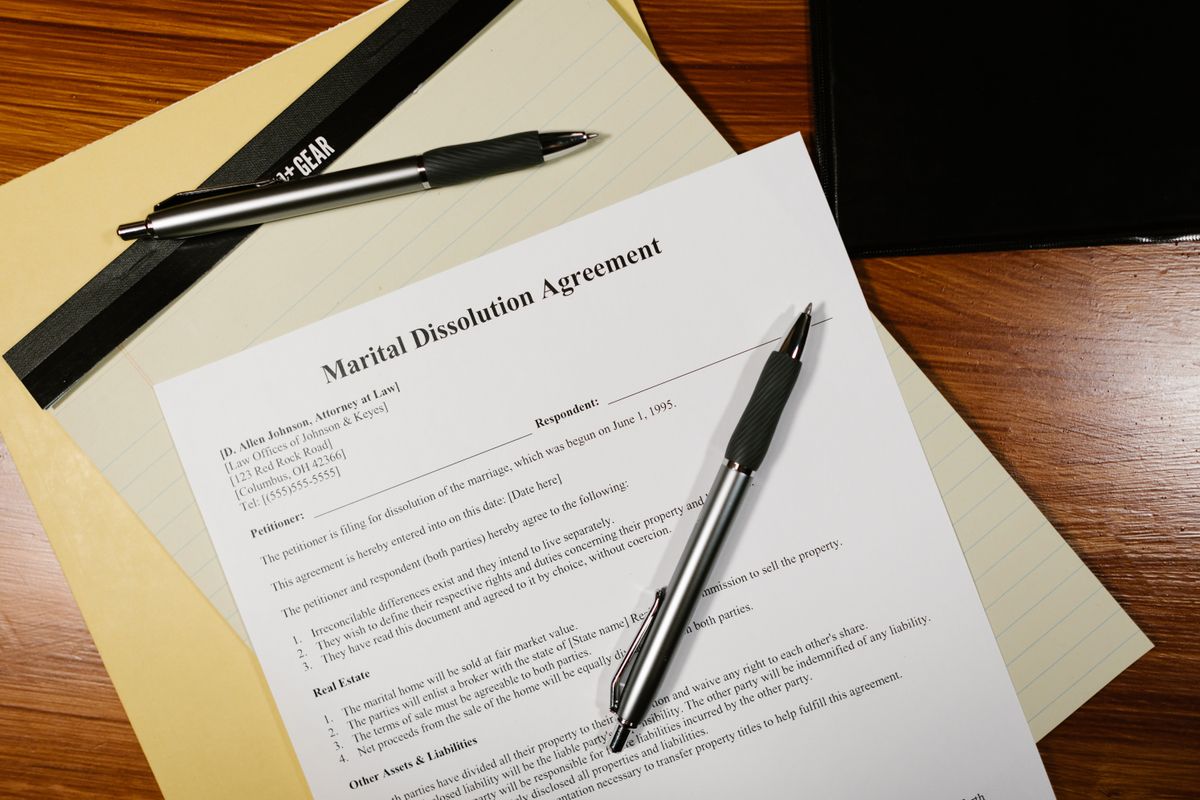
Someone hands you a form. Somewhere near the bottom, in small print, it says the signature has to be notarized. Maybe it's a power of attorney for your aging mother, a form for a title company, or paperwork a court clerk mailed back to you with a sticky note attached. Your first question isn't really "what does notarization mean" — it's "does this actually need it, or can I just sign it and move on?"
I spent eleven years as a paralegal before I became a notary, and I can tell you the honest answer: it depends less on the type of document than on who's going to receive it. A will doesn't legally require notarization in Kansas to be valid, but the funeral home, the bank, or the county register of deeds you're dealing with might have their own requirements layered on top of the law. So the real skill isn't memorizing a list — it's knowing where to look and what questions to ask. Here's how I'd walk you through it.
Documents that almost always need a notary
Some categories are notarized so consistently that you can treat this as a safe default. If you're dealing with any of the following, plan on it:
- Real estate transactions — deeds, mortgages, refinances, and most closing paperwork. Kansas county registers of deeds won't record a deed without a proper acknowledgment.
- Powers of attorney — financial or medical. If you're naming someone to act on your behalf, the institutions that later rely on that document (banks, hospitals, brokerage firms) expect to see a notary's seal, even when the underlying statute is silent on the point.
- Affidavits and sworn statements — anything where you're formally swearing something is true for a court, agency, or employer.
- Trust and estate documents — certain trust amendments, self-proving will affidavits, and small-estate affidavits.
- Vehicle title transfers — in specific situations the Kansas Division of Vehicles requires; more on that in our guide to title transfers.
- Parental and travel consent letters — not legally mandated, but airlines, border agents, and schools treat a notarized one as far more credible than one that isn't.
Documents that usually don't
Most everyday paperwork — a lease between two private parties, an informal loan agreement between family members, a simple bill of sale for a lawnmower — doesn't require notarization to be legally binding. Signatures alone are enough. People sometimes ask me to notarize things out of an abundance of caution, and I'm happy to, but it's worth knowing you're not always required to.
The gray area: medical directives and advance care documents
This is where I get the most questions, and I'll be straight with you: requirements vary by document and by the facility asking for it. Some advance directives are valid in Kansas with just witness signatures; others get notarized because the hospital's intake department wants the extra layer of certainty. I can't tell you what your specific hospital or attorney requires — but I can notarize it either way, so it's rarely worth guessing wrong.
When in doubt, ask the party requesting it
This is the single most useful piece of advice I can give you, and it's not something most articles on this topic bother to say plainly: the notary isn't the authority on whether your document needs notarizing. The bank, the title company, the court clerk, the Kansas Secretary of State's office, the county register of deeds — whoever is going to accept the finished document — is the authority. Call them, or check the instructions that came with the form, before you assume either way. I've had clients drive across town for a notarization their bank didn't actually require, and others get a document rejected because they skipped it, thinking it was optional. A two-minute phone call solves both problems.
"Notarized" isn't a grade of seriousness you add to a document for peace of mind — it's a specific certification that a specific person appeared, was identified, and signed willingly. Whether that certification is required is a question for whoever's requesting the document.
Why notarization exists in the first place
It's worth understanding the "why," because it clarifies the "what." A notarization does three things: it confirms you are who you say you are (using government-issued photo ID), confirms you signed willingly and not under duress or someone else's forgery, and creates a record — in Kansas, logged in the notary's journal — that the signing actually happened on a given date. That's the whole job. It's not a review of whether your document is legally sound, and under Kansas's Revised Uniform Law on Notarial Acts, a notary who isn't also an attorney can't advise you on that part. We can tell you whether a document is notarized correctly. We can't tell you whether it says what you need it to say.
What to bring when you find out you do need one
Once you've confirmed notarization is required, the appointment itself is short. Bring a current, government-issued photo ID, bring the document unsigned (sign it in front of the notary, not before), and if more than one person needs to sign, everyone named on the document should be present. We walk through the full sequence — and what happens if someone can't make it in person — in our appointment checklist, and you can see exactly how a booking works on our process page.
Not sure if your document qualifies?
Send us a quick description of what you're signing and who's asking for it — we'll tell you plainly whether you need an appointment.
A quick gut-check list
If you only remember one thing from this article, make it this: when a document affects real property, grants someone legal authority over your affairs, or gets filed with a court or government office, assume notarization is likely and confirm it. When it's a private agreement between two people with nothing riding on it beyond their own trust in each other, it's probably optional — but never wrong to add for peace of mind. Either way, we handle both general notarizations and the higher-stakes ones, in-office or wherever you happen to be, through our mobile notary service.
A few Kansas-specific examples people don't expect
Beyond the categories above, a handful of situations catch people off guard because the paperwork doesn't look like it needs anything special. A small-estate affidavit used to transfer a car or bank account after someone passes away, without opening a full probate case, is a sworn statement — which means it's notarized as a jurat, not just signed. Loan modification agreements, even a simple one with a local credit union, are frequently notarized the same way a full mortgage would be. And school enrollment or guardianship consent forms, when a child is living with someone other than a parent, often need a notarized signature from whoever holds legal authority over the child, even though nothing about the form looks like a legal document at first glance.
None of these are exotic. They're the kind of paperwork that shows up in the middle of an otherwise ordinary week, which is exactly why it's worth asking rather than assuming either way.
A couple of questions I hear often
Does a notary read my document before notarizing it? Only enough to confirm it's what you say it is and to find the certificate language — not to review its legal content. That's a different service entirely, one I go into in what a notary can and can't do.
Can I get something notarized that isn't legally required, just for extra assurance? Yes. Plenty of clients do exactly this for peace of mind, and there's nothing wrong with it — a notarization never hurts a document, even one that didn't strictly need it.